

Objectives
The project aimed to develop a scalable ERP and MRP ecosystem capable of optimizing manufacturing operations, inventory management, accounting, and supply chain processes while supporting future business growth.
‣ Centralize manufacturing, inventory, accounting, POS, and operational workflows into one platform.
‣ Improve production planning and work order management efficiency across manufacturing processes.
‣ Implement accurate FIFO costing and lot traceability for raw materials and finished products.
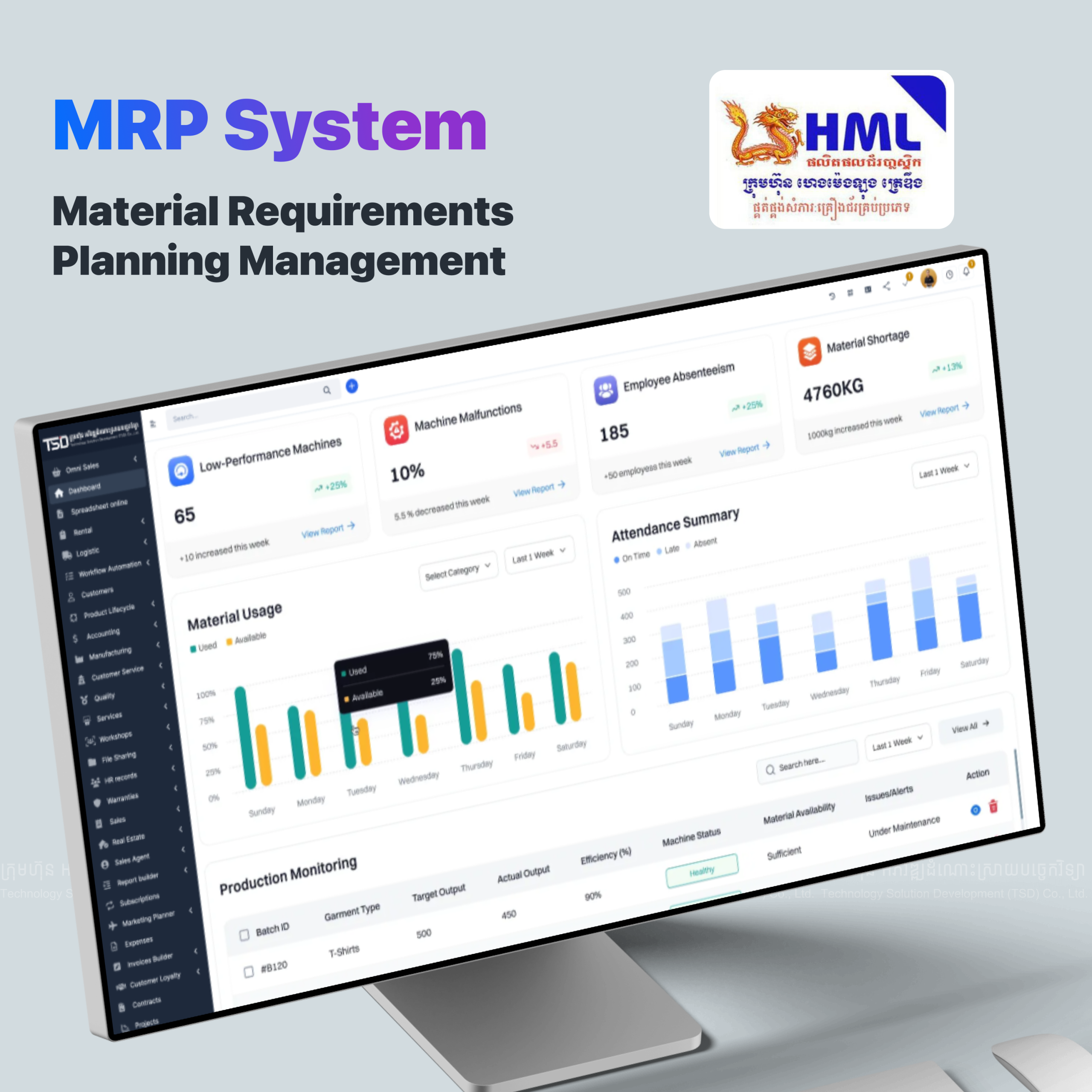
‣ Strengthen equipment monitoring, maintenance scheduling, and production performance tracking.
‣ Enhance quality control processes and provide real-time operational reporting for management teams.

Key Outcomes
The ERP and MRP implementation transformed Mimi Brand’s production operations by centralizing manufacturing, inventory, accounting, and operational management into one intelligent platform. The business achieved greater production efficiency, stronger inventory control, and improved financial visibility across departments.
‣ Improved manufacturing workflow efficiency through automated production and work order management.
‣ Enhanced material traceability with advanced lot management and batch tracking capabilities.
‣ Reduced inventory discrepancies through real-time stock synchronization and FIFO costing automation.
‣ Strengthened quality assurance processes with integrated inspection and quality control workflows.
‣ Increased management visibility through centralized dashboards, production analytics, and financial reporting.
Challenges
Mimi Brand required a centralized ERP and MRP platform capable of managing manufacturing workflows, raw materials, production planning, inventory, accounting, and retail operations within a rapidly growing manufacturing environment. The company faced operational inefficiencies caused by disconnected systems, limited production visibility, and manual tracking processes.
‣ Manufacturing orders and work orders were managed manually, causing delays and production inconsistencies.
‣ Raw material tracking and lot management lacked real-time visibility and traceability.
‣ Equipment maintenance and machine utilization were difficult to monitor effectively.
‣ FIFO costing and production cost calculations were time-consuming and prone to inaccuracies.
‣ Management required integrated accounting, inventory, and profit & loss reporting for better decision-making.